Workshop: Word Rains and Word Clouds
Welcome to this free and open hybrid workshop that aims at bringing together developers and researchers, primarily from the humanities, with an interest in using text visualization for exploring texts.
SciLifeLab Umeå and KBC hosted a lunch seminar at Umeå University focusing on InfraVis and its opportunities for researchers.
How do digital humanities researchers work with large and complex datasets?
At the DHNB: Digital Humanities in the Nordic and Baltic Countries 2026 conference in March, InfraVis was presented by Linnéa Tjernström and Evelina Liliequist (both from the Umeå University node at Humlab) at Aarhus University through a poster and lightning talk.
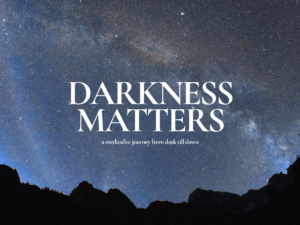
InfraVis recently joined the industry premiere of the dome film Darkness Matters by Costanza Julia Bani at m:brane in Malmö. InfraVis contributed to the production through Julius Häger, who provided precise measurements of light pollution at several specific locations.
Read the latest InfraVis newsletter, fresh from the press.
Cross‑border data collaboration is essential for unlocking the full value of major research infrastructures. The final HALRIC conference highlighted how coordinated expertise from QIM and CIPA/InfraVis boosts scientific impact and why long‑term, interoperable data support must be a shared priority.
InfraVis contributed to the Ocean Science Meeting in Glasgow, where Helena Filipsson and colleagues presented work on artificial cod reefs, VR‑based marine outreach, and high‑resolution scans of foraminifera from museum samples. Their presentations highlighted how InfraVis supports marine research through advanced visualization, automated analysis, and immersive communication tools.
Welcome to this half day workshop 11 March that will cover the Python tools you need to visualize your research. Register here.
Human-Timeline is an interactive React and PlotlyJS application that visualizes the coevolution of human culture , diverse life species and environmental factors across vast timescales. Inspired by SIMILE’s TimePlot and TimeLine patterns, it combines stacked timelines with dual-axis plots so users can see discrete events, continuous measurements, and contextual periods in one place.
Planning to apply for support for a research project? You can now easily express your interest for InfraVis in your grant application by simply selecting us from the dropdown menu for national infrastructures in the Swedish Research Council (Vetenskapsrådet) application form.