InfraVis Presented at HumInfra Conference

Linnéa Tjernström from the InfraVis node at Umeå University presented InfraVis at the HumInfra Concerence in Stockholm.

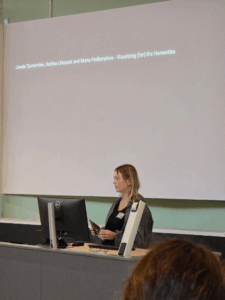
Linnéa Tjernström from the InfraVis node at Umeå University presented InfraVis at the HumInfra Concerence in Stockholm.
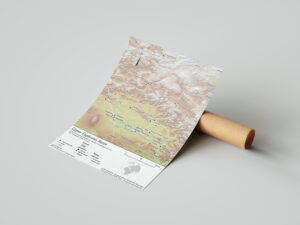
The project produced GIS-based maps and diagrams to visualize archaeological sites and material culture, highlighting the regional shift from hunting-gathering to farming. It integrates environmental and archaeological data to show patterns of human–environment interaction across multiple case study areas and their chronological development.
Welcome to this workshop in NodeGoat offered by InfraVis and Humlab 2 December 2025. NodeGoat is a web-based instrument designed for visualizing data from the social sciences and humanities across space and time. It enables users to map, connect, and analyze data, as well as to share research results in an interactive way.
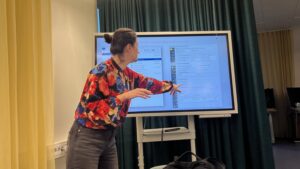
GIS workshop at Uppsala University 6 November held by InfraVis application expert Vasiliki Tsoumari.
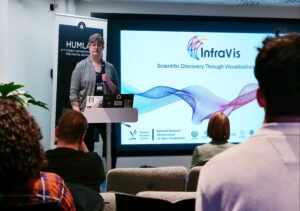
InfraVis hosted a satellite event that was held during the InfraVis at satellite event to Swedish e-Science Academy 2025 together with Humlab and the Environmental Archaeology Lab (MAL).
Welcome to Lund University Open Science Day. InfraVis is part of the session Innovation and Open Science. Registration deadline November 6th.

At the Treesearch workshop at MAX IV Laboratory, InfraVis experts held a presentation, plus a Virtual Reality demo of the ForMAX beamline, where visitors could virtually visit the beamline.
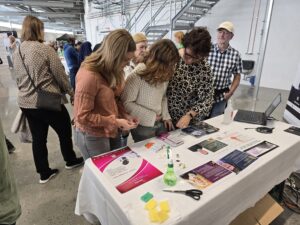
InfraVis teamed up with LINXS Institute of advanced Neutron and X-ray Science to welcome visitors at the Open Day at MAX IV Laboratory in Lund.
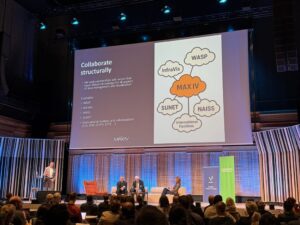
InfraVis joined the summit to highlight how Swedish national research infrastructures work for better handling, analysis and visualization of data.
ForskarFredag is a one-week annual science festival held at various places around Sweden and InfraVis contributed with activities in Lund and Norrköping.