InfraVis National Newsletter Issue #13
Read the latest InfraVis newsletter, fresh from the press.
infravis
Read the latest InfraVis newsletter, fresh from the press.
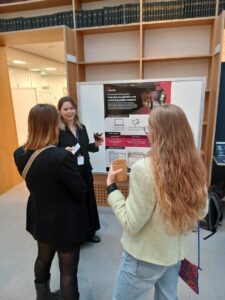
InfraVis contributed to the Ocean Science Meeting in Glasgow, where Helena Filipsson and colleagues presented work on artificial cod reefs, VR‑based marine outreach, and high‑resolution scans of foraminifera from museum samples. Their presentations highlighted how InfraVis supports marine research through advanced visualization, automated analysis, and immersive communication tools.
Planning to apply for support for a research project? You can now easily express your interest for InfraVis in your grant application by simply selecting us from the dropdown menu for national infrastructures in the Swedish Research Council (Vetenskapsrådet) application form.
Brain surgery requires extreme precision, which makes realistic training essential. This project was created to improve practice conditions for a procedure where a catheter is inserted into the brain’s ventricles to relieve fluid buildup. The training setup uses a 3D‑printed skull and a Jello‑based artificial brain that mimics real tissue. InfraVis contributed by redesigning and producing key 3D‑printed components, developing scaffolds to hold the brain model securely, and creating lightweight motion‑capture attachments for tracking skull and catheter movements. InfraVis also supported the design of a replaceable membrane that simulates the moment of puncturing ventricle tissue, enabling more accurate and repeatable training.
Welcome to the Sport and Outdoors Sustainable Accessibility Map – an innovative tool designed to explore, help understand and improve sustainable accessibility to sports and outdoor activities throughout Sweden.