Digital Twin Cities – visualizing the future
Urban planning is complex, and rising water levels due to climate change add further challenges.
With visiting students from Högskolan Väst, the Gothenburg node recently explored the role of digital twins in predicting and managing these phenomena through the work of the Digital Twin Cities Centre at Chalmers University of Technology.
With Trollhättan as study area, students are learning how existing detailed development plans are difficult to uphold in practice, with parts of the planned area already affected by flooding. Rather than focusing on static plans, they investigate how digital twin technologies can support future‑oriented urban planning.
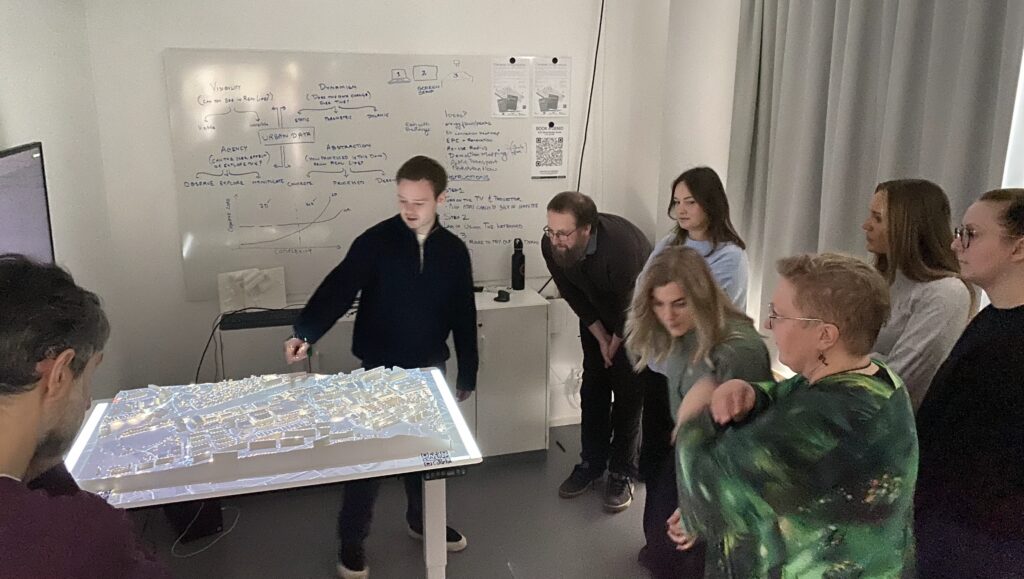
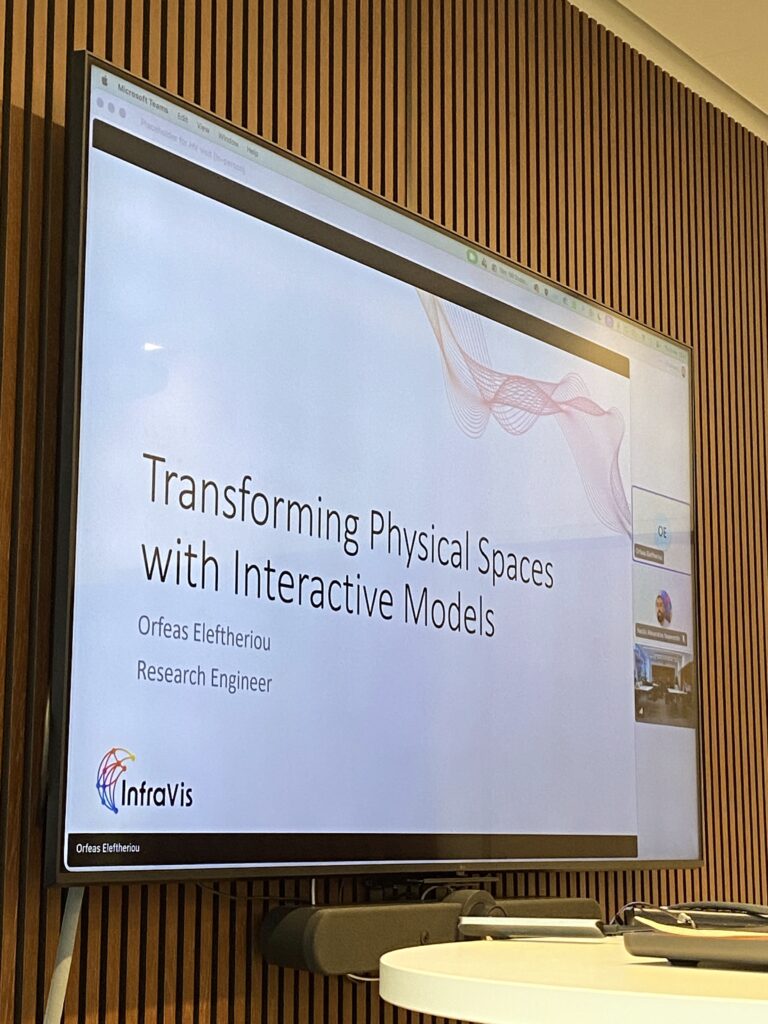
During their course, they are encouraged to question existing tools, identify future needs, and explore new opportunities and technologies. For this reason, the day included hands‑on experience in the Mixed Reality (MR) Studio, at the Division of Architecture and Civil Engineering (ACE). As part of the visit, InfraVis Application Experts Orfeas Eleftheriou and Vasilis Naserentin presented a range of visualization projects demonstrating how urban simulated data (including environmental and infrastructure datasets) can be integrated into interactive digital twin environments using Unreal Engine. The examples showed how complex simulation outputs can be transformed into intuitive, real‑time visualizations that support exploration, analysis, and decision‑making for urban stakeholders.
Lisa Bomble, Senior Lecturer in Sustainable Planning and Collaboration at Högskolan Väst, highlighted the value of the visit: “The students were able to imagine and articulate new questions and possibilities beyond the legal and economic frameworks that often limit planning processes. The openness to new ideas, uses of tools, and ongoing open‑source projects created a sense that collaboration and innovation are truly possible.”
Thanks to DTCC team, and to Alexander Holberg, Sanjay Somanath and Arvid Hall who gave us access to the MR Studio and participated to an insightful discussion with our guests. The day was organised by Fabio Latino, InfraVis node coordinator for Gothenburg.